
McNairy County Arrest Warrants Explained
Every arrest warrant in McNairy County starts on paper. A complaint or affidavit lays out the facts, and a judge reviews them. Under Tennessee Code section 40-6-205, a magistrate issues the warrant when the written examination supports probable cause to believe an offense occurred and that the named person committed it. Some situations call for a summons instead. The complainant supplies the sworn information. Police often fill that role. A magistrate or judge, not an officer, decides whether the process may issue. The Sheriff's Office does not create the court order, and an online payment page can never replace the issuing court's record.
McNairy County Warrants Need Probable Cause
Tennessee Rules of Criminal Procedure 3 and 4 govern the complaint and the warrant-or-summons stage. Rule 5 covers the initial appearance. In McNairy County, General Sessions serves as the local first-level criminal court and performs magistrate functions. Circuit Court handles felony trial-level matters after indictment, along with appeals from lower courts. None of this is a public self-search system. For a county case, call the Circuit Court Clerk at 731-645-1015 and the Sheriff's Office at 731-645-1004. Ask which court issued the order. Ask whether a case number exists too. The official Tennessee criminal-rule index lays out the full rule framework.
Inside a McNairy County Arrest Warrant
McNairy County publishes no sample warrant. A real one would expose someone's case. The state rules and blank form inventory show the kinds of fields a court record may carry, while the county posts no local warrant-number format, bond schedule, or status codes.
| Case / Warrant Number | No McNairy format published |
|---|---|
| Complaint / Affidavit | Sworn facts supporting the probable-cause review. |
| Charge | Offense and classification tied to the case. |
| Issuing Court | Magistrate or judge who authorized the process. |
| Bond | Amount or condition if set; no local schedule is public. |
| Officer Return | May record date and execution or other service result. |
Sealed McNairy County Warrant Records
Public access has hard limits in McNairy County. A sealed indictment or an unserved warrant may not appear in a public-facing search. The limit does not prove there is no process. Ask the issuing clerk or an attorney. Juvenile matters follow separate confidentiality rules and belong with the Juvenile Court Clerk. Tennessee Rule 34 allows public access to court records unless an exception applies. McNairy County posts no local code list explaining every status label. A clerk may hold the court event while a service agency keeps the execution or return. Read the Tennessee court-record access rule for its limits.
Serving Warrants in McNairy County
The issuing court directs lawful service. In McNairy County, the Sheriff's Office leads county law enforcement, while municipal police and constables also serve papers. The county lists seven constable districts. It assigns no warrant type to a single officer and posts no warrant-unit workflow. After service, an arrest, booking, initial appearance, bond decision, and the underlying case are separate events. A served warrant does not end the charge. McNairy County pages leave booking and bond procedure unpublished. Call the sheriff before you appear. The constable service page describes the seven public districts, and the Tennessee Bureau of Investigation agency directory covers agency contacts.
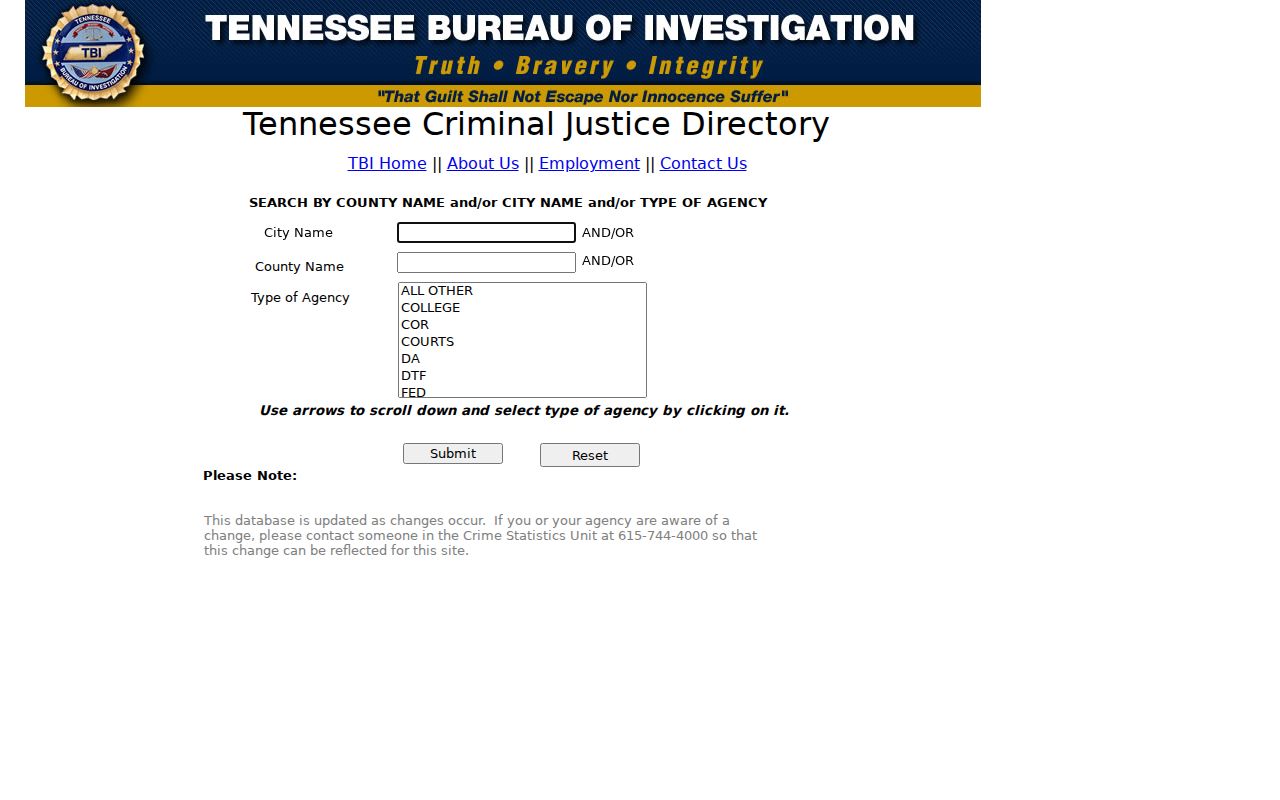
The TBI directory identifies agencies; it is not warrant data or a public self-check.
McNairy County Warrant Service Roles
City police run a separate route for city-offense process. Selmer's official page limits its City Court to Selmer citations, and Adamsville publishes its own court schedule and citation channel. A city case can still involve police service. The sheriff may be your contact for broader McNairy County law-enforcement questions. Check the agency named on the summons or citation first. The Selmer Police information page lists its court day and payment methods.

Selmer's citation page is a city-court route, not a McNairy County arrest-warrant search.
Comparing Arrest, Summons, and Bench Warrants
These instruments call for different responses. An arrest warrant authorizes custody on probable cause. A summons orders an appearance without the same custody command. A bench warrant answers an existing court obligation, so ask the clerk which one appears in the McNairy County case.
| Feature | Arrest Warrant | Summons | Bench Warrant |
|---|---|---|---|
| What It Orders | Take the named person into custody | Appear on the stated date | Bring a person before court after noncompliance |
| Basis | Probable cause on a complaint | Court-authorized notice to appear | Missed date or violated court obligation |
| Who Issues It | Magistrate or judge | Court or authorized officer | Judge in the existing case |
| How to Respond | Contact counsel and issuing court | Attend on the notice date | Ask the issuing court about recall or reset |
McNairy County Arrest Warrants and City Tickets
Adamsville publishes a municipal calendar for traffic tickets and city leash-law violations. Its MyFinePayment interface searches citations by any two of last name, birth date, and citation number. That city tool stays narrow. It shows no McNairy County criminal warrant. It cannot establish that an arrest warrant has been recalled. The city's official court page gives the schedule and jurisdiction. County criminal matters remain with General Sessions or Circuit even when a city contact helps you find the right desk.
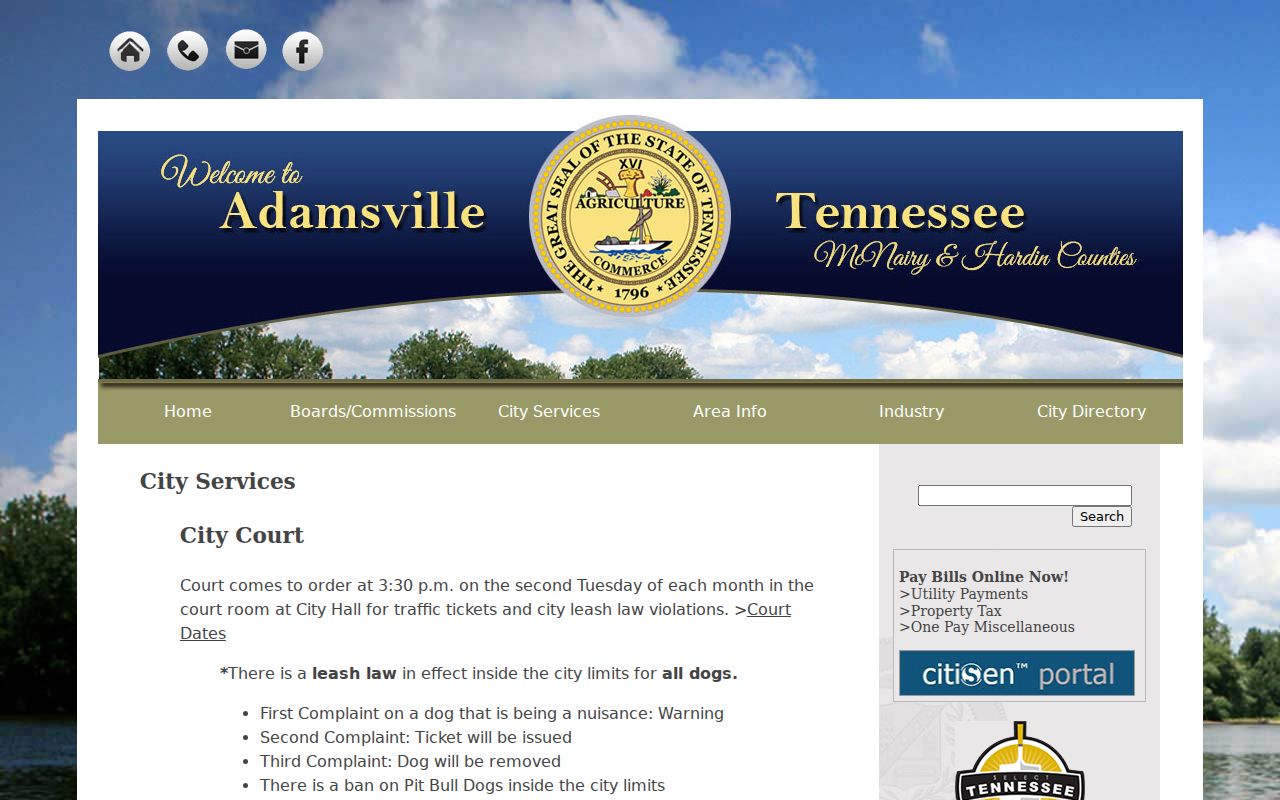
The city court source clarifies citation jurisdiction, not McNairy County's felony warrant process.
If There’s an Arrest Warrant for You
Confirm before you act. Call the McNairy County Sheriff's Office, or the Circuit or General Sessions Clerk, and verify which court issued the warrant and whether it is still active. McNairy County posts no bond schedule and no recall form. It lists no walk-in surrender window, booking hours, or accepted payments either. So ask about all of it by phone before you drive anywhere. A lawyer can also tell you whether a motion, a court date, bond, or a planned surrender fits the case. Once you are arrested or appear voluntarily, find out when the initial hearing happens and what bond conditions apply. Posting bond never closes the case; the charge stays on the docket. Keep your court order and receipt, then ask the clerk how status updates come.
Important: Do not go to the Sheriff’s Office unannounced; speak with counsel and ask the issuing court how to arrange an appearance or surrender.
McNairy County Arrest Warrant Surrender Questions
The sheriff's public page lists office contacts and nothing more. It promises no appointment, no "walk-through," no after-hours intake, and no no-arrest window. Ask instead where booking happens and when a magistrate reviews the case. Ask what property rules apply and where bond questions go. The Circuit Court Clerk can identify the court file, while the sheriff explains its service process. If your paperwork names a federal or out-of-state authority, take it to that jurisdiction's court or counsel, not a McNairy city-payment portal. The county's warrant records home page shows which local office holds county and city matters.